There’s a reason I keep coming back to that November river cruise along the Danube from Budapest, Hungary, to Vilshofen, Germany.
There’s a reason I keep coming back to that November river cruise along the Danube from Budapest, Hungary, to Vilshofen, Germany.
My husband, who also works alongside me as a travel advisor, and I needed to experience this journey for ourselves. We’d seen the brochures, studied the itineraries and heard the stories from clients. But I’ve always believed that travel is more than a destination on paper. You have to immerse yourself in a place to truly understand what makes it special.
We chose November deliberately. The air was cooler, yes, but the streets were less crowded with tourists. Christmas decorations were appearing, markets were beginning to open, and there was a wonderful sense of anticipation building throughout the region.
We began with a pre-stay in Vienna, giving ourselves time to experience the city before the cruise. From there, our journey by train took us to Budapest, where we boarded our AmaWaterways river cruise and began making our way along the Danube toward Germany.
Budapest — Where Our River Journey Began
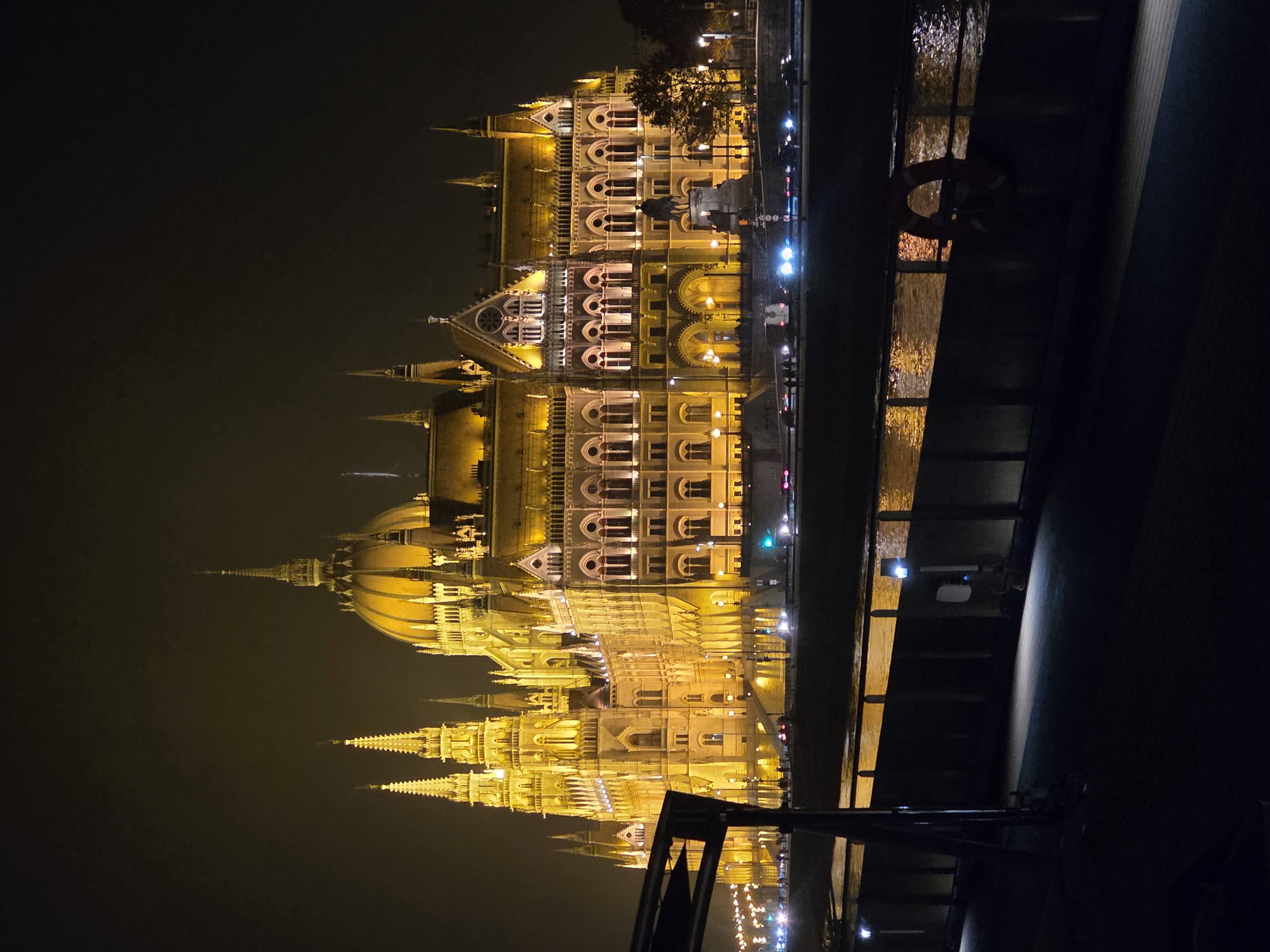
Budapest immediately impressed me with its grandeur. The Danube divides historic Buda and Pest, with magnificent architecture lining both sides of the river. Seeing the Hungarian Parliament Building and the city illuminated along the waterfront gave us a beautiful introduction to what was ahead.
There’s something particularly special about seeing these European cities from the river. You aren’t simply arriving at another airport or train station—you are sailing right into the heart of places that have centuries of history behind them.
Bratislava — Small, Charming and Easy to Explore
Bratislava, Slovakia, had a completely different feeling. Its compact Old Town, colourful buildings, little squares and cobblestone streets made it a wonderful place to simply wander.
This was one of those stops that reminded me that the smaller destinations can sometimes be just as memorable as the famous cities. You don’t always need a checklist of major attractions. Sometimes the pleasure is simply walking, looking around and discovering what is around the next corner.
Vienna — Elegance, Architecture and a Moment I Won’t Forget
Vienna was one of the places that stayed with me most.
If I had to choose one simple moment from the entire trip, it would be sitting at a café in a Vienna square with a hot chocolate in my hands.
Here’s what surprised me. In Canada, come November, most patios are closed down. It’s simply considered too cold. But Vienna showed me a completely different approach.
They brought out blankets. There were heaters. People bundled up and continued sitting outside, talking, laughing and enjoying the evening.
So there we were, wrapped in blankets, drinking hot chocolate and watching Vienna carry on around us.
It wasn’t a famous monument or an elaborate excursion. It was simply a moment of everyday European life—and it became one of my favourite memories of the entire journey.
That European café culture refuses to let cold weather shut things down, and experiencing it firsthand changed the way I understand travelling in Europe during the cooler months.
Dürnstein and the Wachau Valley — The Danube at Its Most Picturesque
As we continued along the Danube, the scenery changed again.
The Wachau Valley brought vineyards, hillsides, small villages and historic buildings along the river. Dürnstein had the storybook quality people imagine when they think about travelling through Austria—narrow streets, colourful buildings and history everywhere you look.
This was where I really began to appreciate one of the greatest advantages of river cruising: the journey itself is part of the experience. You aren’t losing a day travelling between destinations. You can sit aboard the ship watching vineyards, villages and church steeples pass by while you make your way to the next stop.
Melk — History on a Grand Scale
Melk brought us one of the most impressive sights along the route: its magnificent abbey overlooking the Danube.
The churches, abbeys and historic buildings throughout this journey gave us a real sense of just how deep the history of this part of Europe runs. Even if you aren’t someone who normally travels specifically for architecture, it is difficult not to stop and admire the craftsmanship and scale of these buildings.
Linz — A Different Side of Austria
Linz showed us another side of Austria. It felt less like a postcard-perfect village and more like a living European city, with historic architecture mixed with a more contemporary atmosphere.
That variety is something I appreciated about this itinerary. One day you could be wandering through a tiny cobblestone town, and the next you were experiencing a larger city with an entirely different personality.
Passau — Three Rivers and a Beautiful Old Town
By the time we reached Passau, Germany, the journey had changed again.
Known as the City of Three Rivers, Passau sits where the Danube, Inn and Ilz meet. Its colourful Old Town, narrow streets and impressive churches made it another wonderful place to explore on foot.
There is something about arriving in these towns by river that makes the experience feel different. You step off the ship and, instead of facing a long transfer, you are often already close to the historic heart of the destination.
Vilshofen — An Oktoberfest Celebration to Remember
Our river cruise finished in Vilshofen, Germany, a smaller Bavarian town on the Danube—but AmaWaterways made sure our journey didn’t simply end when the ship reached its final port.
One of the experiences that made Vilshofen so memorable was the traditional Oktoberfest celebration for AmaWaterways guests right at the port.
What an amazing experience!
After travelling through Hungary, Slovakia and Austria and finally arriving in Bavaria, we were welcomed with a celebration filled with Bavarian tradition. It was festive, lively and such a fun way to experience a little of the local culture.
That is one of the things I came to appreciate about AmaWaterways. The experience isn’t limited to what you see from the ship or during an excursion. Moments like this bring the destination to life and give you a chance to experience traditions rather than simply hear about them.
Ending our time on the Danube with an Oktoberfest celebration in Bavaria felt incredibly fitting. After days of grand capitals, Austrian villages, historic churches, Christmas markets and beautiful river scenery, here we were celebrating together in Germany.
What a way to finish a river cruise.
But our European journey wasn’t quite over.
From Germany, we continued to Prague for our post-cruise stay.
Prague — The Perfect Finale
Prague was a beautiful way to finish the trip.
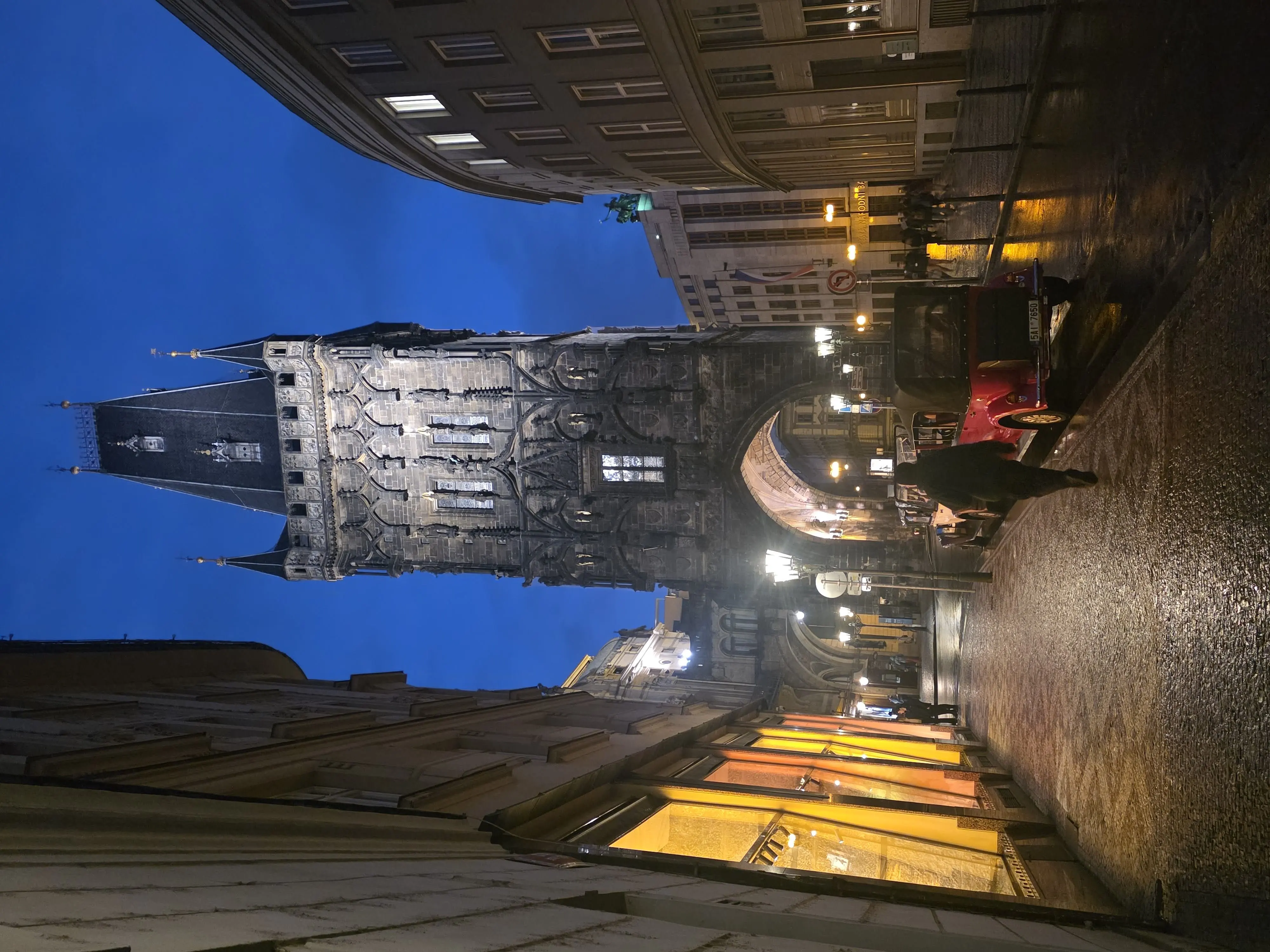
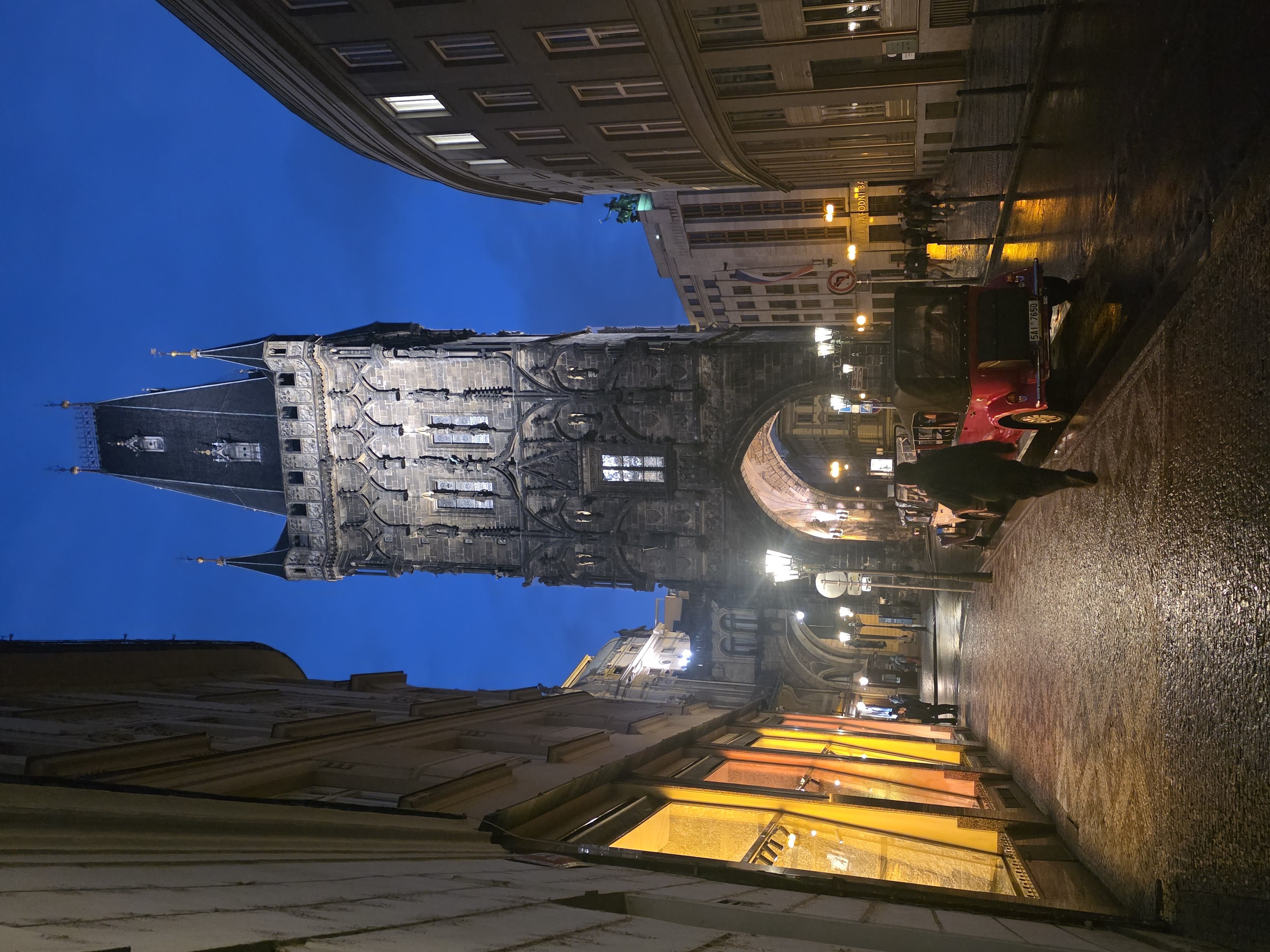
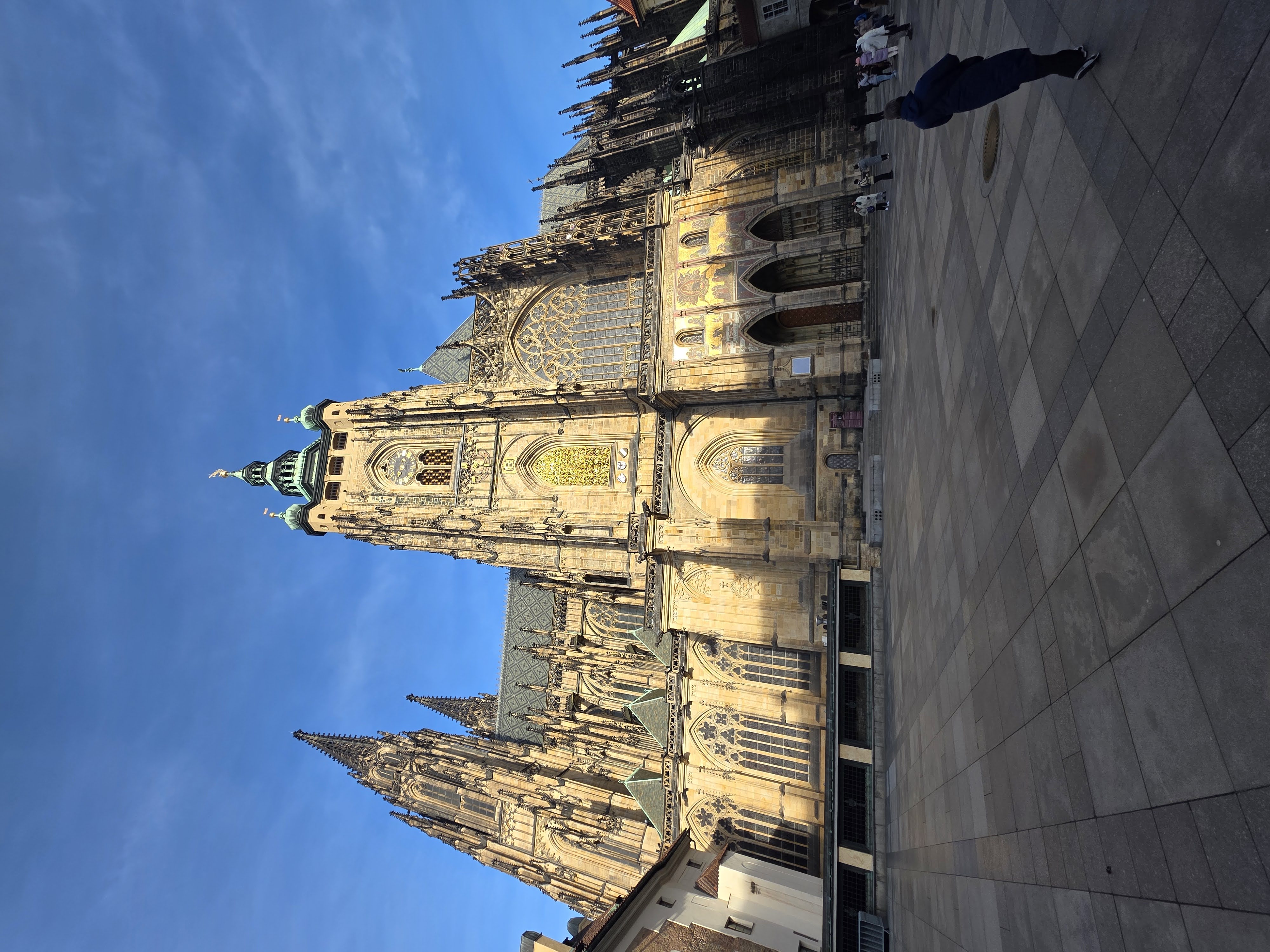
As we arrived, the city was beginning to embrace the Christmas season. The historic squares, Gothic spires, cobblestone streets and Christmas stalls created exactly the kind of European winter atmosphere I had hoped to experience.
By this point, something had become very clear to me: Christmas markets aren’t simply places where you go shopping.
They are social gatherings.
People meet friends after work. Families gather together. They eat, drink, talk and spend time outdoors despite the colder temperatures. The markets become part of the life of the city.
The Christmas Markets Were More Than I Expected
The markets themselves were extraordinary.
There were handcrafted ornaments, handmade gifts and stalls filled with traditional foods. The smell of spices, mulled wine, roasted chestnuts and other seasonal treats drifted through the streets.
Twinkling lights hung above cobblestone lanes while centuries-old buildings created the backdrop. Music played as families and friends gathered together.
There was a warmth to it that photographs simply hadn’t prepared me for.
And that is probably the biggest thing I brought home from this trip.
What I Now Know
Having experienced a European river cruise myself, I can tell you that photographs really don’t capture what it feels like to actually be there.
Budapest gave us grandeur. Bratislava gave us small-town charm. Vienna gave us elegance and café culture. The Wachau Valley and Dürnstein gave us some of the most beautiful scenery along the Danube. Melk brought history on an incredible scale. Linz showed us a more contemporary side of Austria. Passau welcomed us into Bavaria, and Vilshofen marked the end of our time on the river. Prague then gave us one final dose of Christmas magic.
And between every stop was the Danube itself.
That is what makes river cruising different.
You unpack once, settle into your ship and allow Europe to come to you. Every morning can bring a different view outside your window and another town waiting to be explored.
This trip is perfect for travellers who enjoy atmosphere and experiences as much as sightseeing. It’s wonderful for couples looking for a romantic winter getaway, friends and families who enjoy travelling together, and anyone who appreciates European culture, festive traditions, local food and drink, history and beautiful architecture.
It works especially well for people who enjoy exploring on foot and who don’t mind putting on a warm coat and embracing cooler weather.
On the other hand, it may not suit someone whose idea of a vacation centres around hot weather, beaches, nightlife or racing through a packed list of major attractions.
This is a different kind of travel.
It’s waking up and looking out your window to see another European town waiting for you.
It’s walking cobblestone streets without needing to rush.
It’s standing beneath Christmas lights with something warm in your hands.
It’s sitting under a blanket on a Vienna café patio in November and realizing that sometimes the moments you remember most aren't the ones printed in the itinerary.
Having experienced it myself has completely changed the way I talk about Christmas market river cruises with my clients.
I’m no longer describing something I read in a brochure.
I’ve sailed that river. I’ve walked those streets. I’ve felt that November chill. I’ve wandered those Christmas markets. And now, when I recommend this journey to a client, I can help them understand not only where they’re going—but what it actually feels like to be there.